
Project Notes / Project Summary
How a SyteLine payroll export becomes a controlled workflow
A public-safe project summary showing how payroll export work moves from spreadsheet preparation into staged validation and controlled output.
The business problem
Payroll export work is risky because the file can look simple while the rules behind it are not. Hours may come from different sites, work centers, departments, earning types, absence records, and supplemental earnings. If the process depends on manual spreadsheet cleanup, the team has to trust that every period is handled the same way.
The business problem is control. Payroll needs a repeatable way to gather the right ERP time records, map them to the payroll format, review exceptions, and create an output that can be defended if a number is questioned.
How we solved it
The implementation moved the logic into a SyteLine-side export procedure. The procedure collected payroll transaction and time-log records, looped through the relevant site databases, and staged the output in a temporary export table. Instead of forcing users to assemble the file by hand, the system prepared the rows consistently and kept the mapping rules in one place.
The procedure mapped regular, overtime, double-time, absence, adjustment, work center, department, and supplemental earning fields into export-ready columns. It also handled a subtle payroll issue: supplemental earnings should not be duplicated across multiple rows for the same employee. The procedure tracked the employee sequence and zeroed repeated supplemental earnings after the first applicable row.
What the implementation looked like
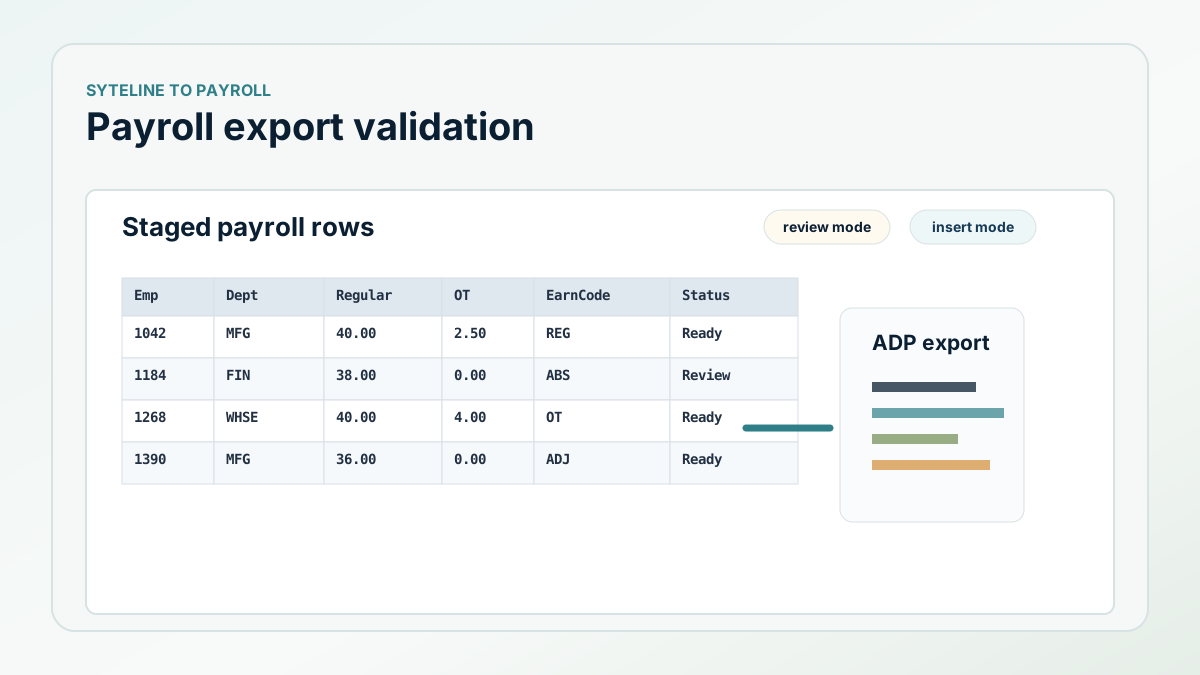
The workflow used a staged table so payroll could review the result before treating it as final. Parameters controlled batch ID, company code, site selection, and whether records should be inserted into the export table. That made it possible to run the process for review, then run it in insert mode when the output was ready.
The implementation also accounted for missing work center or department values by falling back to department data when the preferred payroll department was not available. That kind of fallback is important in payroll work because the exception path has to be explicit, not handled by ad hoc spreadsheet edits.
- Pull time records from the relevant SyteLine site databases.
- Stage payroll export rows before final handoff.
- Map earning categories and adjustment fields to payroll-ready columns.
- Prevent duplicate supplemental earnings across repeated employee rows.
- Support review mode and insert mode as separate steps.
The ROI to measure
The ROI comes from replacing manual preparation with a repeatable export path. Measure fewer spreadsheet edits, fewer payroll-cycle corrections, faster period review, and clearer ownership when an earning code, department, or absence entry needs investigation.
Next step
Have a payroll, export, or finance handoff that still depends on manual checks?
We can review the workflow and define the validation path before changing the system.